

Retail keeps moving. You begin a conversation with the grocery manager, then bakery calls about a staffing gap. While you arrange coverage, a dairy equipment update comes through. Your district manager wants a labor explanation before the afternoon call. The original conversation is still unfinished, but its next step is now somewhere in your memory.
A useful task system helps you return to that unfinished work. It cannot supply another colleague or repair a cooler. It can give each follow-up a place, a next action, and a time to review it.
Public retail discussions describe this pattern: a manager reorganizes coverage after repeated call-outs, while another discussion connects unfinished tasks with frequent interruptions. These are individual experiences rather than evidence that every store works the same way. They still point to a useful question: what helps you restart after attention moves? Coverage discussion, interrupted retail tasks.
Capture the next action, not the whole incident
A note such as “bakery staffing” records a topic. “Confirm bakery afternoon coverage with the department manager before the next break plan” tells you what to do when you return. Keep the first capture short enough to use on the floor.
Try four parts: the area, the next action, the person involved, and the next review time. For example: “Dairy — confirm technician callback with duty manager — check at 2 p.m.” Use only the details needed for the work. A coverage task usually needs the staffing gap and the coverage decision, not somebody's personal health information.
If you are interrupted before finishing another task, leave a restart note there too. “Labor figures checked; still need weekend variance explanation” is more useful than “finish labor.” It tells your future self exactly where the work stopped.
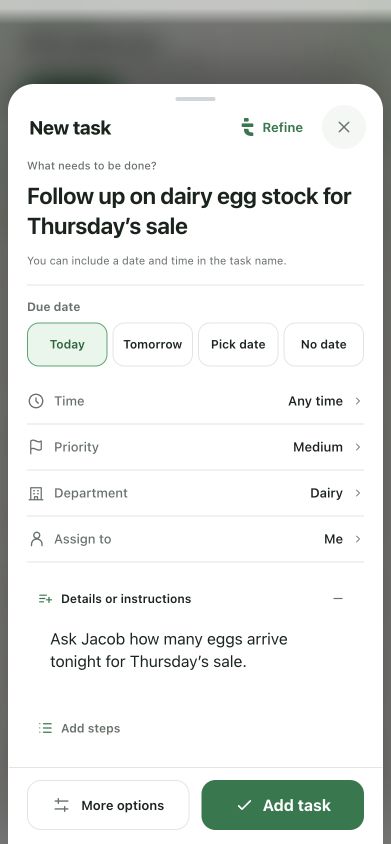
Separate immediate response from later follow-up
Some events require immediate action through your store's established procedures. An equipment concern should not sit in a personal task list while you wait for a reminder. Handle the immediate escalation first. Then capture the follow-up: who was contacted, what response is pending, and when someone will check again.
Other requests can wait for a suitable point in the shift. Ask for the required deadline when it is unclear. “Before today's district call” and “for next week's review” deserve different places in your plan. Avoid using high priority as a substitute for that conversation.
This distinction also makes a task list easier to trust. You can see the difference between work that needs your decision now and work waiting for another person.
Keep one short return list
When a sick call changes the shift, return to a short list of the commitments most likely to disappear. Start with three questions: what needs an update from me, what am I waiting on, and what did I pause?
A working example might be:
- Confirm bakery coverage and update the break plan.
- Check whether the dairy service callback arrived.
- Send the reviewed labor explanation before the district call.
- Resume the grocery follow-up with the last agreed action visible.
The number is less important than clarity. If the list grows faster than work can be completed, agree what moves or who can take ownership. A longer checklist does not create more capacity.
Review at transitions you already have
Choose a few natural moments: after the coverage adjustment, before the district call, or before handing over. Review unresolved work there rather than reacting to a new reminder every few minutes. Keep true deadlines visible, and reschedule work deliberately when circumstances change.
At the end of the shift, move unfinished responsibilities into a clear handoff. Record the next action and current status so the next leader can continue without reconstructing your day. Our retail shift handoff guide includes a reusable format.
How Taldi fits
Taldi brings tasks, department notes, routines and shift handoffs into the same app. Use a task for an action you need to return to, and keep supporting context in the relevant note. Review any AI-assisted wording before relying on it or sharing it.
Start with one recurring difficulty during your trial: perhaps forgotten department follow-ups. After several shifts, look at whether the next action was easier to find and whether handoffs required fewer explanations. Those observations tell you more than the size of your completed-task count.